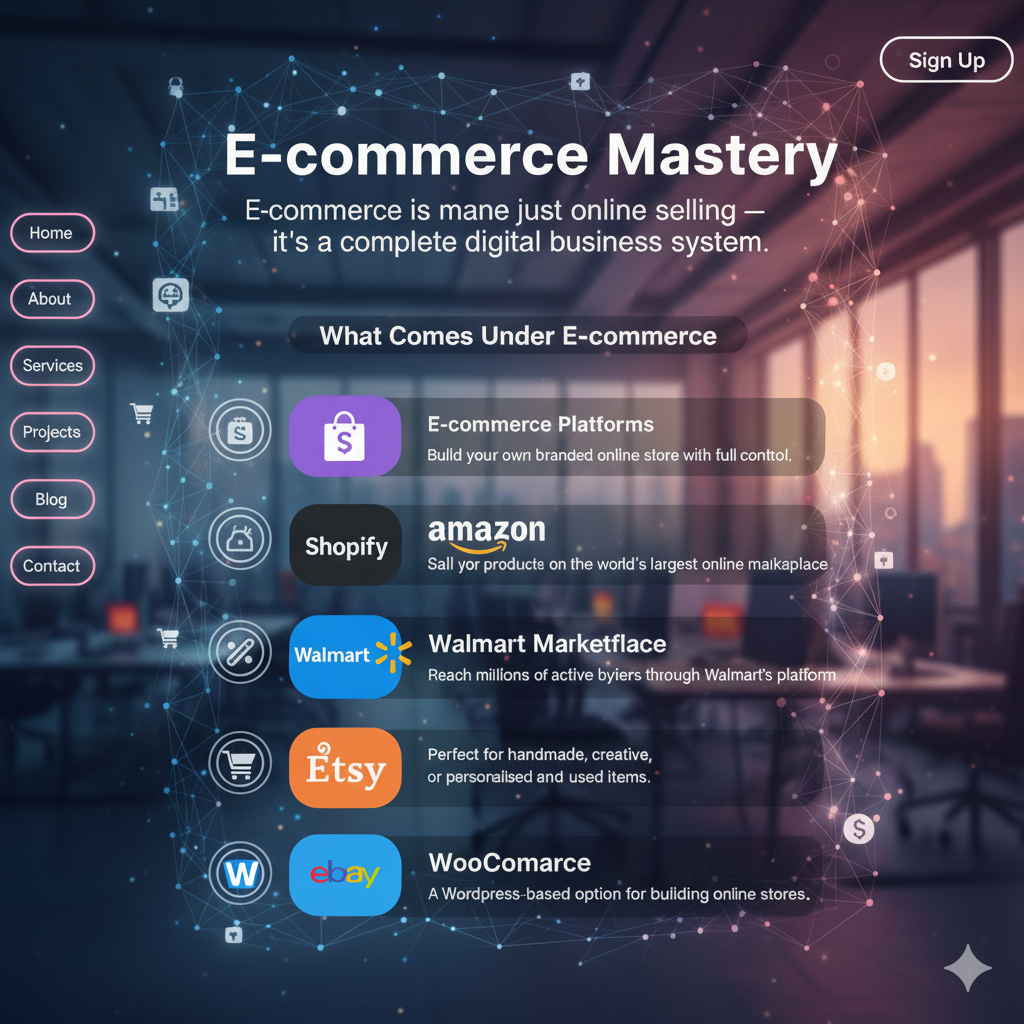
How to Start an Ecommerce Business (Complete Beginner Guide
Learn how to start an ecommerce business step-by-step. Discover ecommerce business models, niche research, website creation, product sourcing, and online selling strategies.
How to Start an Ecommerce Business
Starting an online store is one of the most effective ways to build a modern digital business. With the rapid growth of ecommerce platforms and global online shopping, entrepreneurs now have more opportunities than ever to sell products online and reach customers worldwide.
If you want to learn how to start an ecommerce business, the process involves several key steps such as choosing the right business model, researching profitable niches, building an ecommerce website, sourcing products, and launching effective marketing strategies.
This guide explains the complete process so beginners can confidently build and grow a successful ecommerce venture.
How to Choose an Ecommerce Business Model
Before launching a store, it is important to understand different ecommerce business models. The model you choose determines how products are sourced, stored, and delivered to customers.
Common ecommerce models include:
Dropshipping
This model allows sellers to list products without keeping inventory. When an order is placed, the supplier ships the product directly to the customer.
Private Labeling
Businesses create their own branded products by working with manufacturers and selling them under a unique brand identity.
Wholesale Ecommerce
Retailers purchase products in bulk from suppliers and sell them at a higher price through an online store.
Subscription Commerce
Customers receive products on a recurring basis such as monthly boxes or memberships.
Understanding these ecommerce business model types helps entrepreneurs choose the best strategy based on budget, logistics, and long-term goals.
Ecommerce Niche Research
Choosing the right niche is one of the most important steps when launching an ecommerce store. A well-defined niche helps businesses target specific audiences and compete effectively in the market.
Successful ecommerce brands focus on profitable ecommerce niches where demand is high and competition is manageable.
When researching a niche, consider:
- Customer demand
- Market competition
- Product pricing
- Profit margins
- Long-term growth potential
Many beginners analyze trending products to sell online and evaluate whether the product category has sustainable demand.
Create an Ecommerce Business Plan
Every successful online business begins with a well-structured strategy. An ecommerce business plan helps entrepreneurs define goals, identify target customers, and outline financial projections.
A basic ecommerce plan usually includes:
- Business overview
- Target market analysis
- Product strategy
- Pricing model
- marketing strategy
- operational plan
- revenue projections
Using an ecommerce business plan template can simplify the planning process and ensure that important details are not overlooked.
Ecommerce Business Name and Branding
A strong brand helps ecommerce stores stand out in a competitive marketplace. Choosing a memorable ecommerce business name is the first step toward building brand recognition.
When selecting a name, consider the following:
- Simplicity and readability
- relevance to your niche
- brand uniqueness
- domain availability
Many entrepreneurs use a business name generator to explore creative ideas and discover available domain names.
Branding also includes visual identity elements such as:
- logo design
- brand colors
- typography
- packaging style
- brand messaging
A consistent brand identity builds trust and makes it easier for customers to recognize and remember your store.
Ecommerce Marketing and Launch
Once the store is ready, marketing becomes the key factor in attracting customers and generating sales. Effective business marketing strategies help ecommerce brands reach targeted audiences and drive consistent traffic.
Common ecommerce marketing strategies include:
Search Engine Optimization (SEO)
Optimizing product pages and content helps websites rank in search results and attract organic traffic.
Social Media Marketing
Platforms such as Instagram, TikTok, and Facebook help brands build communities and promote products.
Email Marketing
Email campaigns allow businesses to nurture relationships with customers and encourage repeat purchases.
Paid Advertising
Paid ads can quickly generate traffic and accelerate growth during the early stages of the business.
Setting clear sales goals and tracking marketing performance ensures that strategies remain aligned with business growth objectives.